
menu

close
06 May 2026
Sales ERP System: How To Improve Sales Operations Using an ERP System
Every sales process starts with simple. A quote, an approval, an invoice, shipping, and collection. But when these operations pile up to dozens or hundreds per day, what once seemed straightforward turns into a maze. Where did last week's quote disappear? Is there enough inventory to cover this order? Why don't the finance numbers match sales numbers?
These questions cost companies real time and money. And the answer isn't hiring more coordinators; it's having a sales ERP system that ties all these threads together in one place.
How to Manage Sales in an ERP System?
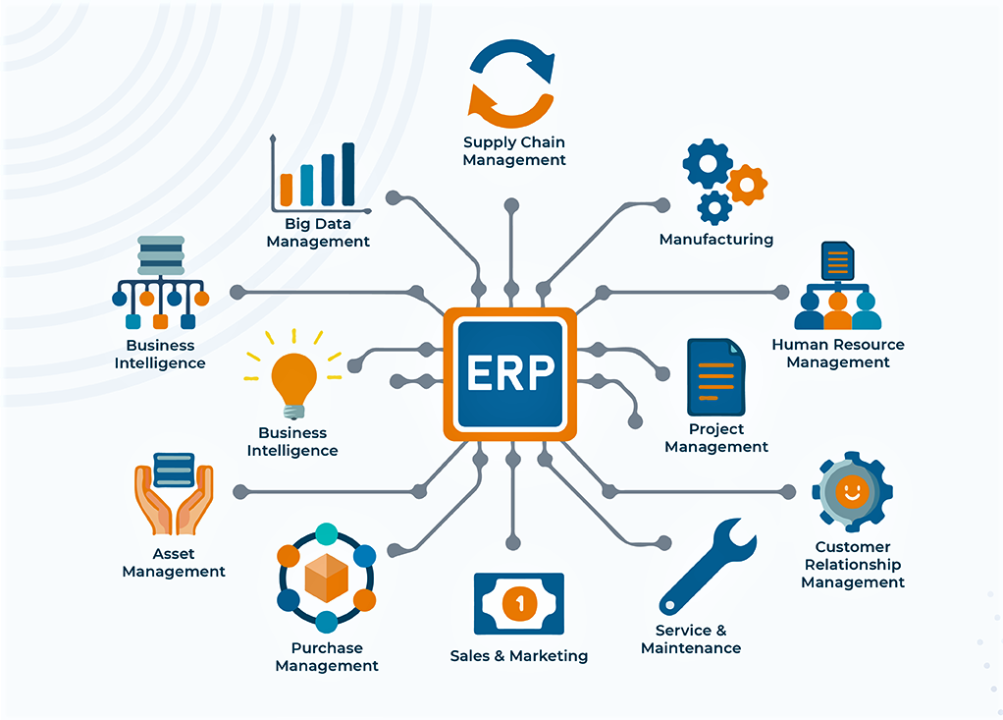
An Enterprise Resource Planning (ERP) system goes beyond just accounting software or a customer database. It's a unified platform that brings sales, inventory, purchasing, accounting, and customer service together in a single interface used by everyone. When a sales rep creates a quote, the system automatically pulls product data from inventory, calculates tax, and checks the customer's credit limit. This is all in seconds, with no redundant manual entry.
A sales ERP solution addresses the most common problem in sales teams: everyone works with different information. Sales sees one thing, finance sees another, and the warehouse doesn't know anything until the last minute. Fragmentation kills deals and exhausts teams.
The functions the system covers within the sales cycle are clear and straightforward.
- Managing customer data and transaction history through an integrated CRM module
- Preparing quotes and invoices electronically in compliance with tax requirements
- Tracks order status from approval through delivery
- Linking sales to inventory in real time to prevent overselling
- Monitoring receivables, payables, and automated collections
Features of ERP for Sales Management
Many companies have effective sales tools, but lack complete visibility. And the problem with missing visibility doesn't surface during normal times; it strikes when you need a quick decision and can't find accurate data in front of you.
- Dynamic Pricing: You can set up flexible pricing rules based on order volume, customer tier, or season. The system applies these rules automatically, speeding up quote preparation and reducing human error to nearly zero.
- Real-Time Dashboard: Instead of waiting for an end-of-month report, you get sales figures updated in real time. The performance of every rep, every product, every branch, at any moment.
- Sales Funnel Management: A sales ERP system tracks every potential customer from the first touchpoint to closing the deal. It also alerts when a response is overdue or an opportunity is at risk of being lost. This kind of consistent follow-up separates a sales team that hits its targets from one chasing deals.
- Cross-Departmental Integration: When sales, procurement, and finance teams work from a single database, decision-making time shrinks, and information flow improves. This integration is precisely the fundamental difference between an ERP system and any collection of standalone tools, no matter how effective they are.
Key Sales Reports in ERP Systems
Making informed decisions require accurate data, not impressions. These are the most critical reports a sales ERP system provides:
- Time-Based Performance Report: Compares sales monthly, quarterly, and annually, revealing seasonal patterns that help you plan ahead.
- Customer Analysis: Classifies customers by spending volume and purchase frequency. So you know who your highest-value customers are and who needs tailored offers to win them back.
- Best and Worst-Selling Products: Clear data that guides your inventory, pricing, and promotional decisions, including slow-moving products that drain capital.
- Opportunity Conversion Rate: Measures the percentage of prospects who become actual buyers. A critical metric for evaluating sales team efficiency.
- Collections and Receivables Report: Identifies overdue invoices and alerts the finance team before problems snowball. The most valuable reports connect commercial performance with financial status simultaneously.
How to Choose the Right ERP System for Your Company?
The market is packed with options. And the problem with too many choices is that they confuse rather than clarify. Here's what you should actually be asking:
- Your Operations Scale: A company selling fifty items needs a different system than one handling thousands of SKUs across dozens of branches. Assess your daily order volume first.
- Customization Capabilities: The right system adapts to your workflow, not the other way around. Make sure you can modify data fields, approval workflows, and reports.
- Ease of Use: If your team needs weeks of training, that's a red flag. The interface should be clear and responsive from day one.
- Technical Support: A provider that offers ongoing support and regular updates is fundamentally different from one that disappears after the contract is signed.
- Total Cost of Ownership: Don't just look at subscription fees. Factor in customization, training, hosting, and maintenance costs. High implementation costs are among the most prominent challenges companies face, and ignoring this aspect can surprise you later.
How ERP Improves Sales Operations?
Owning the system alone isn't enough. A sales ERP system gives you the tools, but results come from how you implement them.
- Start by reviewing your current sales cycle and identifying where everything is slowing down. Is it preparing quotes? Internal approvals? Collections? Design workflows within the system to address these specific bottlenecks, not generally.
- Use Smart Alerts. Set up notifications when a quote remains unanswered for more than 48 hours, or when the stock of a high-demand product drops low. These alerts transform the system from a passive database into an active assistant that pushes the team toward closing more deals.
- Review Reports regularly. A short fifteen-minute weekly meeting to review the sales dashboard catches problems early and keeps the team aligned with targets.
- Training Your Team Not Just on the Technology, but on the Why. When a sales rep understands that logging a note on a customer account today will help them close a deal next week, adoption shifts from obligation to conviction.
Best ERP for Sales and Marketing (ValuePlus ERP)
When searching for a sales ERP system that fits the Middle Eastern market, Value Plus stands out as an option worth consideration. The system fully supports Arabic in its interface and serves diverse sectors: retail and sales, medical centers, manufacturing and production, and project management and contracting.
Its modules cover sales, point of sale (POS), purchasing, inventory, financial accounting, customer relationship management (CRM), supply chain, and human resources, meaning you won't need separate standalone systems.
In the retail sector specifically, it offers a POS system that supports multiple payment methods and connects to inventory in real time. It also offers complete product management with barcode support, and variants like sizes and colors. It also supports VAT calculation and tax report preparation, with a full audit trail for all transactions.
A key practical advantage: the POS system operates on an Online/Offline principle, meaning operations don't stop even when the network is down.
The Next Step Toward Smarter Sales
Efficient sales management has become a competitive necessity, not a choice. Companies that adopt a sales ERP system make faster decisions, serve their customers better, and forecast revenue with greater accuracy. This is an advantage that experience alone can't deliver; it takes the right system.
If you're ready to transform your sales team, we invite you to visit Value Plus ERP and explore its solutions first-hand.
Book a demo today, and start building a sales operation that works for you around the clock.









Copyright © 2024 Modern Speed.