
menu

close
29 March 2026
Best ERP System in Saudi Arabia for Modern Businesses
Business success is not measured by activity alone, polished reports, or how busy teams appear to be. Real success comes down to one critical question: Is the business actually making money while operating, not just at the end of the year?
Many companies in Saudi Arabia believe operations are running smoothly, only to discover later that profitability has quietly eroded. Revenues look healthy, transactions are flowing, and teams are working hard, but margins shrink, cash flow tightens, and financial clarity disappears.
In most cases, the issue isn’t weak management or lack of effort. The real problem is the absence of a single, unified system that connects finance, operations, administration, and decision-making in real time. When data is scattered across disconnected tools and spreadsheets, costs rise unnoticed, inefficiencies compound, and issues surface only when it’s too late to correct them.
In a fast-growing, highly regulated market like Saudi Arabia, an ERP system is no longer optional. Companies need accuracy, transparency, and compliance to stay in control, competitive, and confident in their decisions.
ERP System Meaning: What Is an ERP System?
Before going any further, let’s clear up what an ERP system actually is…
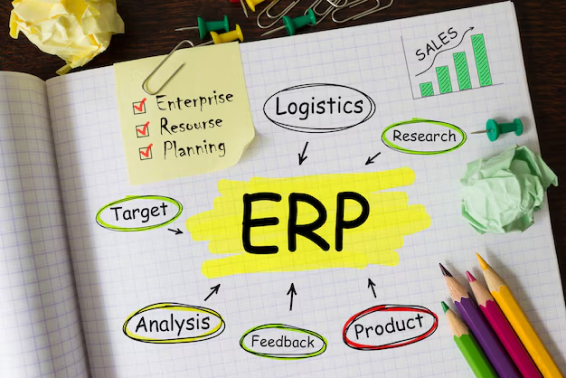
- An ERP system (short for Enterprise Resource Planning) is a single, connected platform that brings your financial, administrative, and operational activities together in one place. Instead of working across scattered tools, emails, and spreadsheets, everything lives inside one system and follows the same logic.
What makes an ERP system powerful isn’t just that it stores data; it’s how it connects information across the business. Every cost, transaction, approval, and process is linked to the right department, activity, or responsibility. This means you’re not just seeing numbers, you’re seeing the story behind them.
ERP System Examples
ERP system examples typically include:
- Financial accounting and reporting
- Budgeting and cost control
- Sales and invoicing management
- Cash flow tracking
- Procurement and supplier management
- Human resources and payroll
- Executive dashboards and analytics
Unlike traditional accounting software, ERP systems don’t operate in isolation. They align daily operations with financial reality, giving leadership reliable insights instead of delayed summaries.
Best ERP System in Saudi Arabia
The best ERP system in Saudi Arabia isn’t the one with the longest feature list or the most complex dashboard. In real life, complexity rarely helps. What matters is whether the system fits how your business actually works.
A good ERP should feel like support, not another system people avoid using. It should respect Saudi regulations out of the box, give leadership a clear view of the numbers as they move, and make daily work easier for teams, not slower.
In practical terms, a strong ERP system should…
- Handle Saudi tax and regulatory requirements without constant manual fixes
- Show financial performance in real time, not after the month closes
- Be simple enough that teams actually use it every day
- Produce clear reports that management can understand without translation
- Grow with the company instead of needing replacement two years later
But the most important part isn’t technical at all.
An ERP system only creates value when people trust what they see on the screen. When teams rely on it in meetings, use it to answer questions, and make decisions based on it without hesitation. When that happens, the system stops being “software” and starts becoming part of how the business is run, and that’s when results follow.
Why Choose Value Plus for Programming and ERP Systems?
Value Plus ERP wasn’t built to look impressive in a demo. It was built to work in real businesses.
It’s designed specifically for medium and large companies operating in Saudi Arabia, companies that deal with daily decisions, tight timelines, and the need for clear visibility across the business. The focus isn’t on flashy features, but on workflows that actually make sense in day-to-day operations.
With Value Plus ERP, finance, operations, reporting, and decision-making all live in one connected system. Budgeting, expenses, invoicing, and cash flow aren’t separate processes anymore; they’re linked and updated as things happen.
That connection changes everything. Management doesn’t have to wait weeks to understand where the business stands. You see performance while it’s unfolding. Decisions are based on real numbers, not assumptions or delayed reports. Potential risks show up early, when there’s still time to act.
The result isn’t just better reporting. It’s better control, clearer planning, smoother operations, and the confidence of knowing there won’t be surprises waiting at the end.
Final Thoughts
If you’re running a business in Saudi Arabia, the real challenge usually isn’t effort or growth; it’s visibility. When information is scattered, you end up reacting late, after profits slip or issues grow.
A unified ERP system solves this by bringing everything into one clear view. It replaces guesswork with real-time insight, aligns teams around the same data, and allows leadership to act early.
Start building a stronger management foundation now and run your business with clarity and confidence using Value Plus ERP.
FAQs:
Is an ERP system suitable for small and growing businesses in Saudi Arabia?
Yes. ERP systems help small and growing businesses organize operations, gain financial visibility, and stay in control. The right system can scale as the business grows without needing replacement.
How long does it take to implement an ERP system in Saudi Arabia?
Implementation time varies by business size, but many modern ERP systems can be implemented within a few weeks with minimal disruption when planned properly.









Copyright © 2024 Modern Speed.